If you’ve just searched “website designer near me”, you’re about to be shown a list of businesses in an order you probably don’t understand, several of which aren’t near you at all.
Worth knowing how that list is built before you start ringing people. And worth asking the more useful question underneath it: does having a designer nearby actually change the outcome of the project?
Here’s the honest answer, from someone with an obvious interest in you deciding that it does.
What That Search Is Actually Showing You
A “near me” search returns two different lists, ranked by two different mechanisms, and most people read them as one.
The three results beside the map. Ranked largely on how physically close each business is to wherever you’re standing, plus how complete their Google Business Profile is and how many recent reviews they have. This list genuinely is local. It also changes if you walk half a mile down the road, which is why no two people see quite the same thing.
The ordinary blue links underneath. Not ranked on proximity in the same way at all. A studio forty miles away with a well-optimised page for your town can sit above one on your high street. This is where “near me” stops meaning near you.
So the second list is the one to be sceptical of. Not because those businesses are bad, but because their position is telling you about their marketing rather than their location.
How To Tell Who’s Actually Local
This takes about thirty seconds per candidate and it filters most of the list.
Look for a street address. Not a town name in the page title — an actual address, with a building and a postcode.
Check it appears in more than one place. The contact page, the footer, and their Google listing should all show the same address. A business that’s genuinely somewhere has no reason to be coy about where.
Search the address itself. If it comes back as a serviced-office building or a mail-forwarding company, you’ve found a virtual office. That’s a monthly fee for the right to appear local, and plenty of studios ranking for your town are paying it.
Check the reviews mention the place. Real local clients tend to name where they are.
None of this makes a remote studio a bad choice. It just means you should know which one you’re talking to, rather than finding out at the point you’d assumed you could pop in.
Where Being Local Genuinely Helps
Three things, honestly:
The first meeting. Sitting across a table at the start of a project — where you explain the business, and someone asks the awkward questions about what it actually sells and to whom — is better in person. It’s the one part of a web project that reliably benefits from being in the same room.
Photography. If your site needs pictures of your premises, your team, your stock or your work, someone being twenty minutes away rather than four hours changes whether that happens properly or gets replaced with stock images.
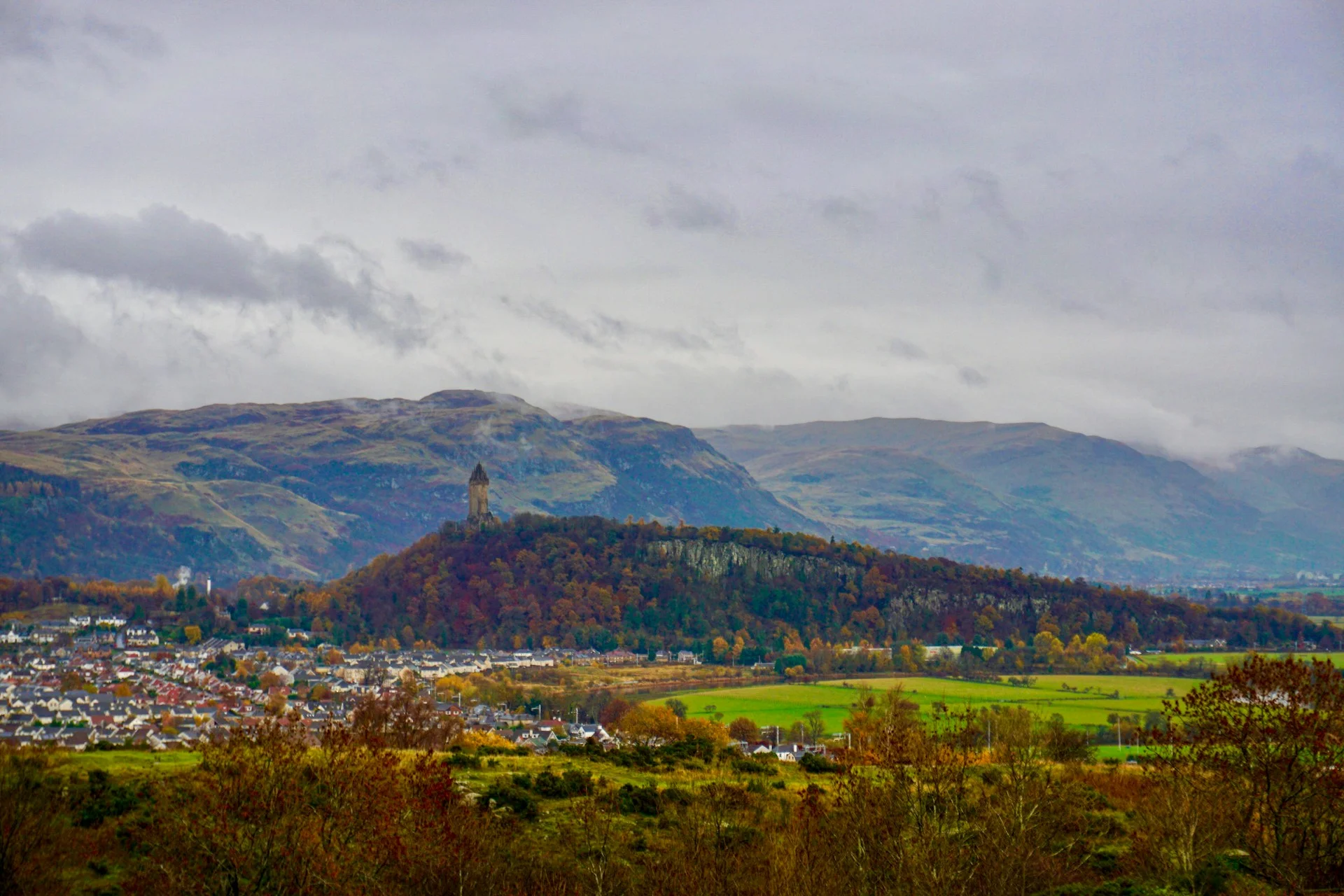
Understanding the market. Knowing that a business in Stirling is competing for a Forth Valley catchment rather than a city one, or that a trade covering Alloa and Falkirk needs to say so explicitly, is local knowledge. It’s not mystical, and it does shape the site.
Accountability, quietly. Someone who might run into you in the street behaves differently from someone four hundred miles away who has your money.
Where It Makes No Difference At All
This is the part you won’t read on most “local web designer” pages.
The actual build. Design and development happen on a screen. Nobody writes better code because of their postcode.
Design reviews. These are genuinely better on a shared screen call than around a meeting table, where you end up with four people squinting at one laptop and nobody able to see detail. I’d rather do these remotely even when in person is easy.
Ongoing support. Fixing something on your site happens over an internet connection. A designer down the road doesn’t fix a broken contact form faster than one in another city — they fix it faster if they answer their phone.
Your local rankings. This is the big misconception. Your Google visibility is driven by your address, your Google Business Profile and your website. Where your designer sits has no bearing on it whatsoever. A local agency cannot rank a local business better for that reason alone, and anyone implying otherwise is selling you something.
What Actually Matters More Than Distance
If you’re choosing between a designer twenty minutes away and one two hours away, these should all outrank the drive:
Whether they ask about your business before they talk about design. Someone who opens with colour preferences is decorating. Someone who opens with who buys from you and why is designing.
Whether you can see comparable work. Not necessarily your industry, but a similar problem solved — a booking, an enquiry, a sale.
Who you’ll actually be talking to. At an agency, the person who wins the work is frequently not the person who does it. Ask directly.
What happens after launch. A website isn’t a delivery, it’s something that needs updating, patching and occasionally fixing. Ask who does that and what it costs before you sign anything, not after.
Whether they’ll tell you something you don’t want to hear. The most useful thing a designer told me early in my career was that I didn’t need what I’d asked for. If everything you suggest gets enthusiastic agreement, you’re talking to a salesperson.
Clarity about money. A real number, in writing, with VAT stated. The Scotland price guide covers what different budgets actually buy.
A Reasonable Way To Shortlist
- Search the term, then ignore the ordering and open six or seven.
- Apply the address test above. Note who’s genuinely local and who’s appearing to be.
- Look at their own website critically — it’s the one piece of their work they had complete control over.
- Read their Google reviews, weighting recent ones.
- Contact three. Judge the reply: did they ask about your business, or send a price list?
That last step tells you more than anything on the search results page.
Where I Am
Since the whole point of this article is that you should check: Fractal Studio is at 80 Alexander McLeod Place, Fallin, Stirling FK7 7HP. That’s a real address, it’s on the contact page and in the footer of every page here, and it’s the same one on the Google listing.
Most clients are across Stirling, the Forth Valley, Glasgow and Edinburgh. Some are considerably further — the client list reaches South Africa — which is the practical evidence for the argument above: distance hasn’t been the limiting factor, fit has.
Every project is handled by one person from first call to launch, so the person you brief is the person writing the code and the person who answers when you ring in two years. That, rather than the postcode, is what I’d actually argue is worth choosing.
If you’re in the area, web design in Stirling covers what working together looks like locally, including the Forth Valley towns and what it costs. If you’re in Glasgow or Edinburgh there are honest pages for those too, both of which open by admitting I’m not based there.
And if after all that you decide the right person for your project is somewhere else entirely, that’s a perfectly sensible conclusion to reach. Get in touch if you’d like a straight answer about whether it’s me.