Almost every “best page builder” list is an affiliate page. The rankings follow the commission rates, every builder is described as excellent, and nothing is ever bad at anything.
This one has no affiliate links in it. I build client sites on several of these and have opinions formed by having to maintain the results three years later, which is a different perspective from having tried them for a fortnight.
The Short Version
- Bricks — the best output quality of the group, and my default for new builds
- Elementor — the biggest ecosystem by far, and the safest choice if you want maximum third-party support
- Divi — best value if you run several sites, and the gentlest for nervous clients
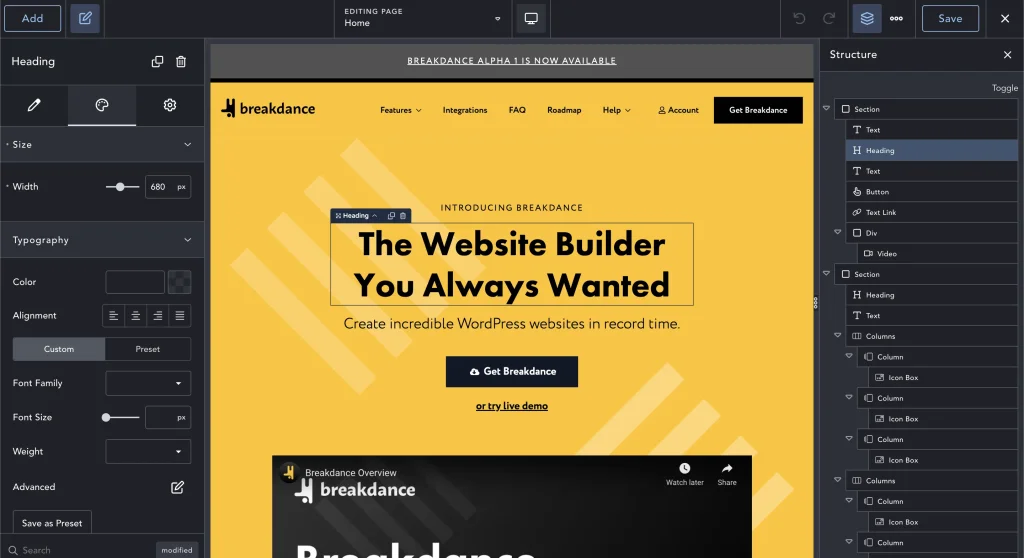
- Breakdance — genuinely good, from the Oxygen team, and worth watching
- Oxygen — powerful and developer-focused, and a harder recommendation than it used to be
The honest caveat before any of it: the builder is rarely why a site is slow. Unoptimised images, cheap hosting, no caching and eleven plugins installed to supply six widgets will sink a site built on any of these. Get those right and the difference between the top three narrows considerably.
1. Bricks
Best for: new builds where performance matters and someone competent is doing the building.
Bricks produces the cleanest markup of any visual builder I’ve used. Because it arrived after the others, it was designed having already seen how page builders go wrong at scale — bloated wrapper markup, dependence on add-on packs, editors that crawl on long pages — and built to avoid those rather than patch them later.
Headers, footers and dynamic templating are native, so the plugin list stays short by default, which is where a lot of its real-world speed advantage comes from. Query loops and Advanced Custom Fields support mean repeating content pulls from structured data instead of being hand-built page by page.
Against it: a smaller third-party ecosystem than Elementor, and it expects more of the person building. It’s a builder for people who know what they’re doing. If that’s not you and won’t be, the gentler options below are a better fit.

2. Elementor
Best for: anyone who wants the largest possible library of add-ons, integrations and answers.
Elementor is the most-installed page builder by a wide margin, and that scale is a genuine practical advantage. Almost every plugin worth using ships Elementor widgets. Whatever problem you hit, somebody has already solved it publicly.
Pro brings the Theme Builder, forms, popups and dynamic content, and most real business sites need it. The WooCommerce Builder lets shop and product pages be designed to match the rest of the site rather than inheriting WooCommerce’s defaults.
Against it: the reputation for bloat is mostly a reputation for how it’s used — the easy availability of add-on packs is exactly how sites end up with nine plugins supplying four widgets. Built cleanly with add-ons kept deliberately minimal, Elementor performs well. Built the way it usually gets built, it doesn’t.
3. Divi
Best for: running several sites, and for clients who’ll be editing their own.
Divi’s licensing is the standout: an Elegant Themes membership covers unlimited sites, annually or as a one-off lifetime purchase. If you maintain more than a couple of websites, that maths gets decisive quickly.
It’s a theme and a builder in one package, so there’s no seam between the theme’s design and the builder’s. The Theme Builder controls headers, footers and templated content from one place, which keeps a site coherent as it grows rather than drifting page by page.
In my experience it’s also the most forgiving for a non-technical owner taking over their own site. That’s worth more than a feature-comparison table suggests — a builder somebody avoids opening is worse than one with a shorter spec sheet.
Against it: output is heavier than Bricks, and the all-in-one nature means committing to the theme as well as the builder. Divi 5’s architectural rewrite addressed a lot of the long-standing performance complaints, and it’s still not the leanest option here.
There’s a fuller head-to-head in Elementor vs Divi.

4. Breakdance
Best for: people who want Oxygen’s philosophy with a friendlier editor.
Breakdance comes from the Soflyy team behind Oxygen, and it’s essentially what they’d build knowing what they know now: clean output, a much more approachable interface, and a solid set of native elements including forms and WooCommerce support without an add-on stack.
It’s a genuinely good builder and it competes directly with Bricks. The two are close enough that the choice mostly comes down to which editor you prefer.
Against it: a smaller community than the top three, so there’s less written about it when you get stuck.
5. Oxygen
Best for: developers who want near-total control and don’t need hand-holding.
Oxygen has been the performance-focused choice for years, producing minimal markup by going around the WordPress theme system entirely. In the right hands it still produces excellent results.
Against it: it’s the hardest to recommend to anyone who isn’t a developer, the learning curve is steep, and with the same team now putting significant energy into Breakdance, a new project would more sensibly start there. Included here because it’s still in wide use and still capable, not because it’s where I’d start in 2026.
What Actually Decides This
After all of the above, three questions settle it:
Who is editing this site in two years? If it’s a non-technical owner, weight heavily towards Divi or Elementor. If it’s you or a developer, Bricks or Breakdance.
How many sites are you running? One, and licensing barely matters. Several, and Divi’s unlimited membership is hard to argue with.
Does the design need anything unusual? Dynamic content, custom queries, deep ACF integration — Bricks and Breakdance handle this most cleanly.
What shouldn’t decide it is a feature-comparison table. All five have more features than your website will use, and the marginal widget count is irrelevant next to who has to live with the thing.
Or None of Them
Worth saying, since nobody selling page builders ever does: a lot of sites don’t need one at all.
If your site is mostly fixed content that changes occasionally — a marketing site, a portfolio, a service business — a static build on Astro will be faster than anything on this list, cheaper to host, and has no plugin stack to patch every month. This site runs on exactly that.
A page builder earns its place when somebody non-technical needs to change things regularly. If nobody’s going to, you’re paying a performance tax for a convenience you won’t use.
Not sure which way your project points? Tell me what you’re building and who’ll be maintaining it, and you’ll get a straight recommendation rather than whichever one pays the best commission.